Chronic Lower Back Pain Treatment in Akron, Ohio
Softwave Healing works on chronic lower back pain across Summit and Medina counties. The first visit finds which tissue actually reacts, so treatment aims at that instead of guessing.
The spot that hurts is often not the spot that is damaged
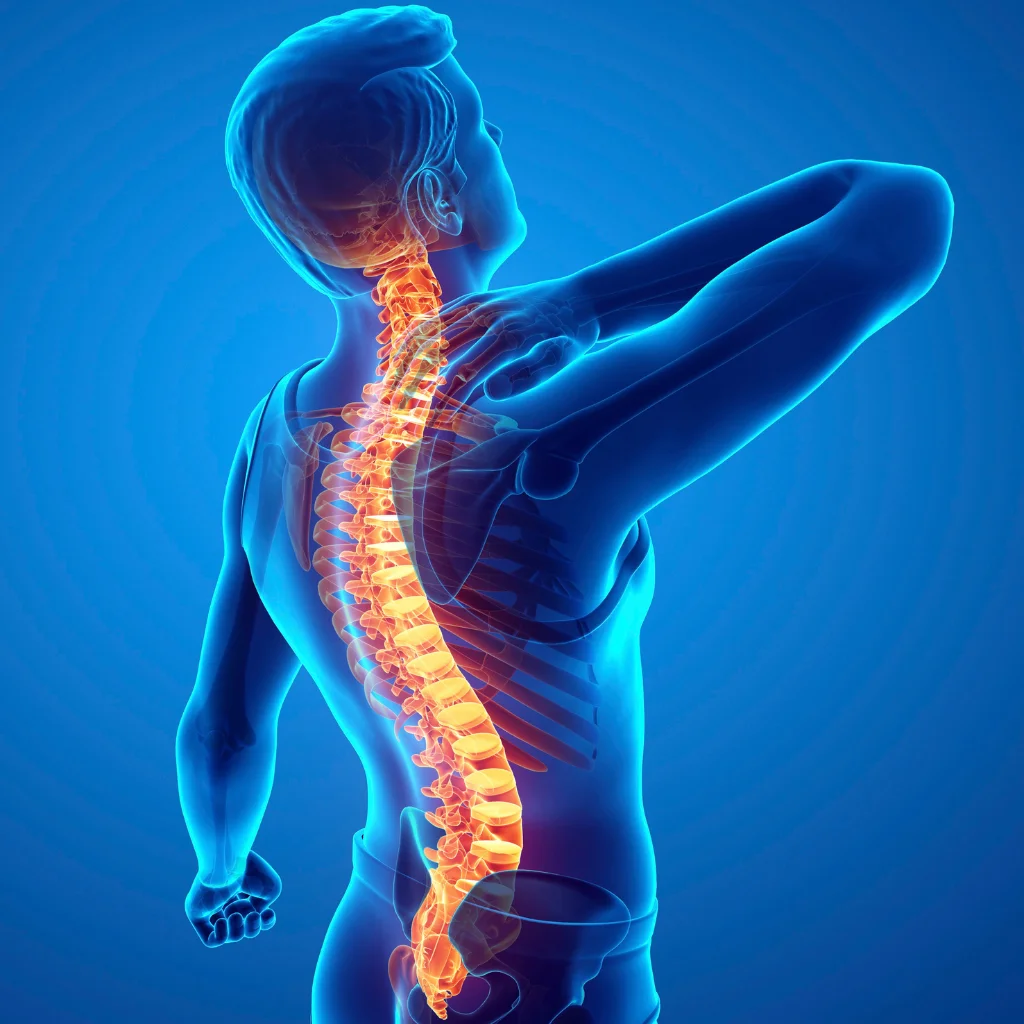
Backs refer pain. What you point at when someone asks where it hurts is frequently not where the irritated tissue sits, which is part of why generic back treatment plateaus so often. The mapping scan is built around that problem. The wand works across the lower back and stays quiet over healthy tissue, then reacts when it reaches the part that is actually involved. People are regularly surprised by where it lights up. That reaction is what sets the target for every session that follows.
What a course of care looks like
This is a course, not an appointment. Packages run six to twelve sessions, and people commonly report noticing a change somewhere in the first three to six. Each session is short and there is no incision, no anesthesia, and no recovery period, so people go back to work straight from the visit. Some soreness in the treated area later that day is normal and usually settles by the next morning. If your work involves lifting, say so, because the intensity gets set with that in mind.
Being straight about the evidence for backs
The strongest research behind shockwave therapy sits with tendon and fascia problems rather than with chronic lower back pain. That is worth saying plainly. What this treatment does is aim energy at soft tissue that reacts under the wand, and the mapping visit is how you find out whether your back has tissue that reacts at all. If it stays quiet, you have learned that for $49 to $99 rather than for the price of a package. Clinics advertising shockwave as an answer for every back are worth a second look.
Before anyone starts talking about fusion
Back pain that will not resolve tends to escalate through the same sequence. Rest, then physical therapy, then injections, then a conversation about fusion. People describe feeling trapped between shots that wear off and an operation that comes with months of rehab.
This is not an alternative to surgery and it should not be sold as one. If you have a structural problem that needs fixing, it needs fixing. What it is is something to try in the gap, while that decision is still open, without an incision or a recovery period that costs you the rest of your year.
The mapping visit is how you find out whether there is anything here for you, before that gap closes.
What it costs when you cannot take time off
Manufacturing employs about 38,500 people in Summit County, second only to health care. That matters here, because a bad back in that kind of work is not something you push through at a desk. It costs shifts.
So the money question runs both ways. Sessions run $150 to $250 per treatment area, and packages run $1,200 to $3,200 for six to twelve sessions. None of it is covered by insurance, and it is HSA and FSA eligible.
Set against that: the physical therapy copays that plateaued, and the days already lost. Treatment here has no recovery period, so sessions do not add to that count. The $49 to $99 mapping visit is where you find out whether the larger number is worth spending.
Common Questions
Will this help if my back pain has lasted years?
Long-standing pain is one of the most common reasons people come in, especially after physical therapy has plateaued. Whether your back responds is what the mapping visit answers. Problems that have been building for years usually need the longer end of the six to twelve session range rather than a short course.
Do I need an MRI or a diagnosis before coming in?
You do not need one to book the mapping visit. If you already have imaging or a diagnosis, bring it, because it gives the clinician context for what the wand finds. The scan itself is not a substitute for imaging and is not read as one.
Is this like a chiropractic adjustment?
No. There is no manipulation, no cracking, and nothing is moved or realigned. Acoustic waves pass through soft tissue and release energy where tissue is damaged. People sometimes see the two as interchangeable because both are non-surgical, but the mechanism is not the same.
Can I keep working while I go through treatment?
Yes. There is no incision, no anesthesia, and no recovery period, so people return to work straight from the appointment. Soreness later that day is common and usually gone by morning. Heavy labor is worth mentioning up front so the intensity is set accordingly.
What does a course cost?
The discovery and mapping visit runs $49 to $99. Single sessions run $150 to $250 per treatment area, and multi-session packages run $1,200 to $3,200 depending on severity and how many areas need work. Care is cash-based and HSA or FSA eligible.
Start by finding out what reacts
Start with the $49 to $99 mapping visit. It tells you whether your back has tissue that responds before you commit to a course of sessions.